10 Scottish Dark Tourism Hotspots

Updated: May 3, 2021
Do you find yourself attracted to places associated with tragedy and the macabre? If you do, you might be interested in the travel trend: Dark Tourism. Dark Tourism involves visiting places with a disturbing past, either to develop a more personal connection to it or just out of sheer morbid curiosity.

This very specific trend has been on the rise in recent years, with the amount of people visiting places such as Auschwitz, Chernobyl and Ground Zero growing year after year. However, with international travel being unlikely for most because of COVID, Dark Tourists are having to look closer to home to satiate this desire to explore places with a disturbing past.
To help those who are that way inclined, I have made a list of 10 dark tourist spots right here in Scotland.
1: Glencoe

It's hard to imagine that somewhere as stunning and awe inspiring as Glencoe could have such a horrific past. Glencoe was the site of the massacre of clan MacDonald by the clan Campbell. On the morning of February 13th 1692, 38 men, women and children were slaughtered by Campbell soldiers who had been ‘quartered’ with the MacDonalds for the two weeks.
The events of the massacre were spread out across Glencoe. There are great spots throughout the Glen where you can learn more, such as the Glencoe Visitors Centre and the Glencoe Folk Museum.
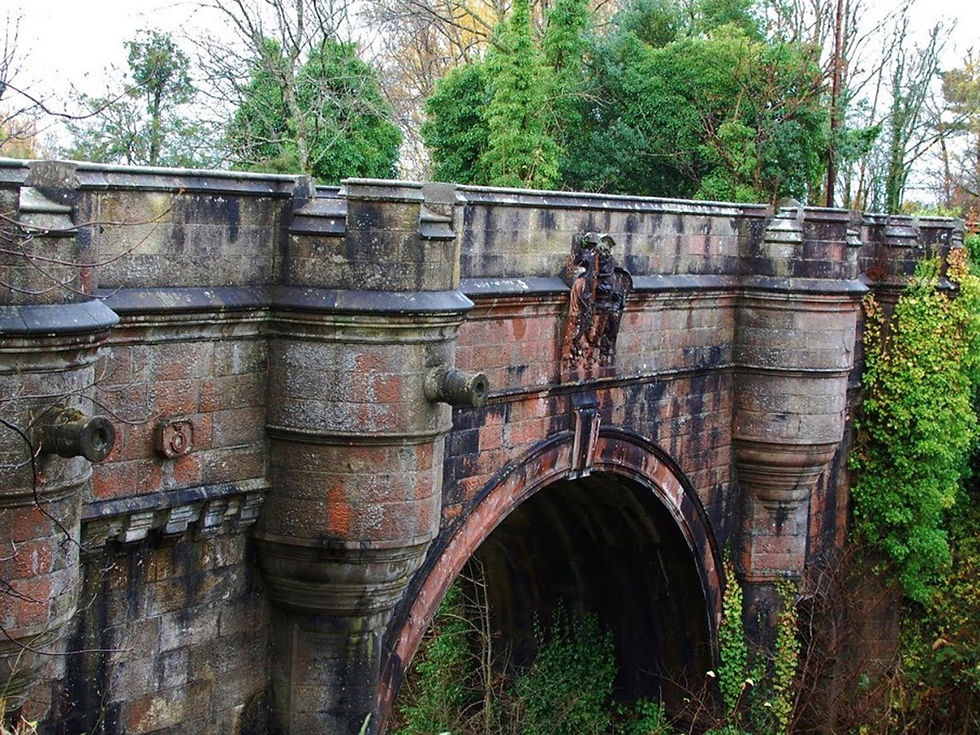
Overtoun Bridge is within the grounds of Overtoun House in Dumbartonshire. It has become a popular spot for walkers as it is situated in the middle of a lush green wood with stunning views and surrounded by scenic hills and valleys. However, the bridge on the grounds has become synonymous with dogs jumping to their deaths.
Over 600 ‘doggy suicides’ have been reported by locals. They have shared disturbing accounts of dogs becoming what can only be described as possessed, before jumping over 50ft from the bridge onto the rocks below.
If you plan on visiting with your furry friend, I’d recommend keeping them on a short leash.
3: Bennane Cave

Situated on the rugged Galloway coast, Bennane Cave is a gorgeous, isolated spot for an adventure. It has become a popular spot for dark tourists as it is believed to have been the home of the legendary (potentially fictitious) Sawney Bean clan.
Sawney Bean led a clan of 48 incestuos cannibals on a 25 year reign of terror. According to legend, the clan ate over 1,000 people in the 16th century before being captured and killed.
Whether you believe the tale or not, the cave is a beautiful spot and has been the home of Scottish Cave dwellers as far back as the 16th century; with its last occupant, Snib Scott, only leaving in the 1970s.

Cultybraggan is the last remaining PoW camp in Scotland. It’s located in the picturesque county of perthshire, just a mile south of Comrie and is steeped in history. Built in 1941, the site held up to 4,000 prisoners and housed members of the SS, Wehrmacht and Luftwaffe.
The attraction offers a comprehensive and fascinating tour which allows you to immerse yourself in the lives of the prisoners that stayed there and has an eerie, haunting atmosphere.

Just outside of Glasgow, Gartloch Asylum lies derelict and dilapidated. The hospital opened to patients in 1896 in response to a rising number of working poor that were experiencing mental illness. The hospital had a reputation for particularly cruel treatment of its patients, with some going as far as to describe it as a concentration camp.
The area around the hospital is now under development, but the hospital itself still stands and is easy to access. However, any intrepid urban adventurers should be careful. The hospital is old and in rough condition. Those who venture inside are treated to incredible architecture but also an unsettling ambience.

Ayrshire’s theme park has been closed for over 10 years now. The park had struggled financially for years before its closure. However, the final nail in the coffin was the death of an 18 year old attendant, who fell 80ft to his death while trying to fix a ride.
The park itself was developed on the ruins of an old castle. Those who decide to visit are treated to a two for one on attractions; you get rusting, Pripyat-esque, rides alongside the ruins of a medieval castle. What a treat!

The Isle of Eigg is renowned, not only for its natural beauty and rugged landscape, but also its commitment to sustainable energy, farming and tackling climate change. With a population of under 100 people, it's hard to believe that this island has ever been anything other than a tranquil, Hebridean, getaway.
However, Cave of Frances on the southern shore of the island, hides a tragic past within. In 1577, 400 members of clan MacDonald, were murdered by members of a feuding clan.While hiding from the raiding party, they were suffocated using smoke from a burning pile of wet hay at the mouth of the cave, and their bodies left behind.
8: Ailsa Craig

At a glance, Ailsa Craig is a boring, unassuming, rock off the coast of South Ayrshire. However, the island has a storied past which has seen it used as a prison, a defence against a potential Spanish invasion and site of the murder of catholic laird by of Andrew Knox.
Once a refuge for Catholics in post reformation Scotland, the island has now become a sanctuary for Gannets and Puffins. There are a number of tour operators that will drop you off on the island and let you explore the ruins of its castle, caves and lighthouse.

This disturbing obelisk sits on the banks of Loch Oich and marks the spot where the decapitated heads of 7 murderers were cleaned. The horrific beheadings were an act of vengeance by the clan MacDonald of Keppoch, in response to the murders of two heirs to the chieftainship of the clan in 1663.
This bloody event is commemorated with a sculpture of the 7 severed heads being held by the hand of Iain Lom, a famous Gaelic poet, who carried out the executions.

In 1745, Bonnie Prince Charlie sailed out of exile and landed on the coast of Scotland alongside a small number of Jacobites. Over the next year he would attempt to restore his father, and the royal Stuart bloodline, to the throne.
This final Jacobite rising enjoyed some early success, penetrating as far south as Derby, before it met its bloody end on a boggy moor in Culloden, 1746.
The battle lasted under an hour but saw 1,500 Jacobite soldiers killed, not only on the battlefield, but in barns and buildings that were raised by government soldiers.
Today, the battlefield is maintained by the National Trust of Scotland, who have built an amazing visitors centre which displays artefacts from the battle and allows visitors to lose themselves in Scottish history.


Comments